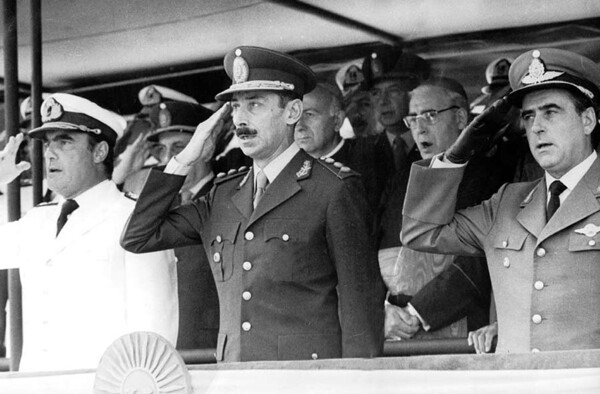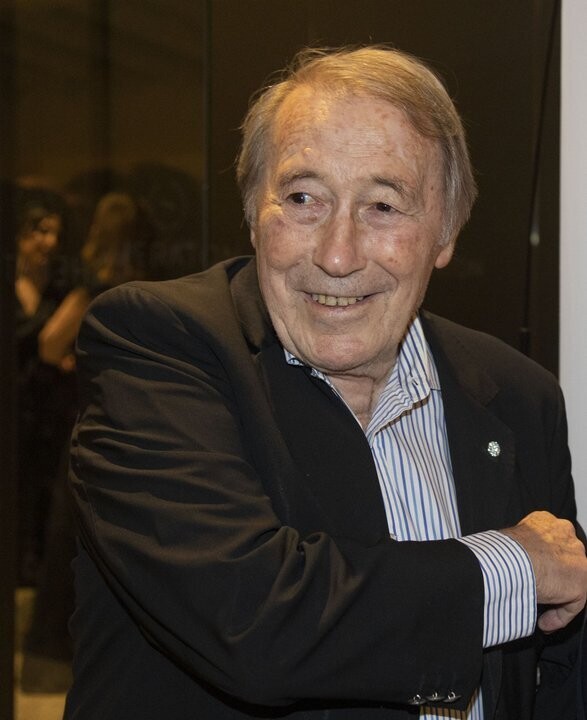
Buenos Aires, March 24 (NA) – Jorge Rafael Videla had been de facto president for over a year and a half when, in December 1979, he uttered a phrase that became etched in the history of our country and exposed the true purpose of the last military dictatorship. During a press conference following a visit by the Inter-American Commission on Human Rights (IACHR), journalist José Ignacio López of the Noticias Argentinas agency asked about people being unsuccessfully sought by their families. Without flinching, Videla retorted: “He is neither dead nor alive, he is a disappeared person.” These words, which became famous, were in response to the journalist's question. It would later be revealed that this response hid the repressive actions of the military regime: illegal kidnappings, torture in clandestine centers, and the so-called “death flights,” which involved throwing illegally detained people from airplanes into the sea or rivers. In an interview with historian Felipe Pigna for the documentary 'Memory to Build,' López admitted that he had searched for the archives of that press conference and “found a pearl that was an enormous historical injustice” because, at the time, the focus had not been placed, as it should have been, on the journalist who had asked “the most famous question” and who had dared to do it “very bravely.” “I had seen that fragment many times, in poor quality and out of context, and I said, ‘This has to be here because it was official material.’ We looked at it and we were surprised by this extraordinary material, with a Videla in civilian clothes, as if calling for a new stage of the Process, which was the reason for the conference. And we got to the part where you appeared with such a brave question that obviously bothered him: he moves his neck, clears his throat… You achieved your goal, which was to bother him and make him say what he had to say, which was tremendous. That was what they thought and what they did,” Pigna highlighted to López. López stated that he had relied on the speech given by Pope John Paul II a few months earlier in St. Peter's Square, with a message directed to the disappeared in Latin America, especially from Chile and Argentina. “I took advantage of what the Pope said in the Angelus of the last Sunday in October (of 1979), because he had spoken of the disappeared, and that is why I could ask in his name… because that's how I said it to Videla,” the journalist recalled. From that moment on, López was considered a reference for professional ethics and freedom of the press in our country; in addition to having worked in Argentina's most important media, upon the return of democracy, he was called to serve as presidential spokesperson for former President Raúl Alfonsín, with whom he maintained a close relationship until March 2009, when the former president died. “The press has a role in democracy and a function to fulfill in the operation of institutions: as a spokesperson, to represent the voice of the president before the journalists, and as a journalist, to be at the service of public opinion and freedom of expression,” López emphasized.